Around one in five women of reproductive age is iron deficient, and many have no idea.
You might blame the tiredness on work, the breathlessness on being unfit, and the dizziness on skipping lunch. But for many women, the real culprit is the humble mineral iron.
Why women are at risk
Every month, menstrual blood loss quietly drains your iron stores. It's the leading driver of iron deficiency during the reproductive years. Some women are at even higher risk:
-
Those with heavy or prolonged periods
-
Those eating a vegetarian or vegan diet
-
Those who are pregnant or breastfeeding
Sufficient, deficient or anaemic? Making sense of your results
When you get blood tests back, "normal" can be misleading.
For example, when I look at my own blood test results, it shows that ferritin should be between 20-200µg/L as the reference range, but if the ferritin had dropped to day 27µgL, I would actually be considered iron deficient, even though my levels are still within range…
Here's a simple way to think about it:
-
Sufficient: ferritin (your iron storage marker) is above 30 µg/L. Your stores are healthy.
-
Iron deficient: ferritin has dropped below about 30 µg/L. Your stores are depleted, and you may already feel it, even if your haemoglobin is normal. The Australian and NZ guidelines set the minimum functional store at 15 µg/L, so below that is clearly deficient.
-
Iron deficiency anaemia: stores are so low that haemoglobin falls too, and your body can't carry oxygen properly. This is the medically significant stage and needs a GP's input.
Know the signs
Tiredness, dizziness, pale skin, breathlessness, and a rapid or irregular heartbeat.
How much do you need?
Under the Australian and NZ Nutrient Reference Values:
-
Reproductive-age women: 18 mg per day (the RDI)
-
Pregnancy: 27 mg per day
-
Breastfeeding: about 9 to 10 mg per day
Why does the requirement decrease during breastfeeding?
Breastfeeding lowers your iron requirement because your periods usually pause, but check your ferritin postpartum, as pregnancy and birth can leave your stores running rather low.
Food first: build an iron-smart plate
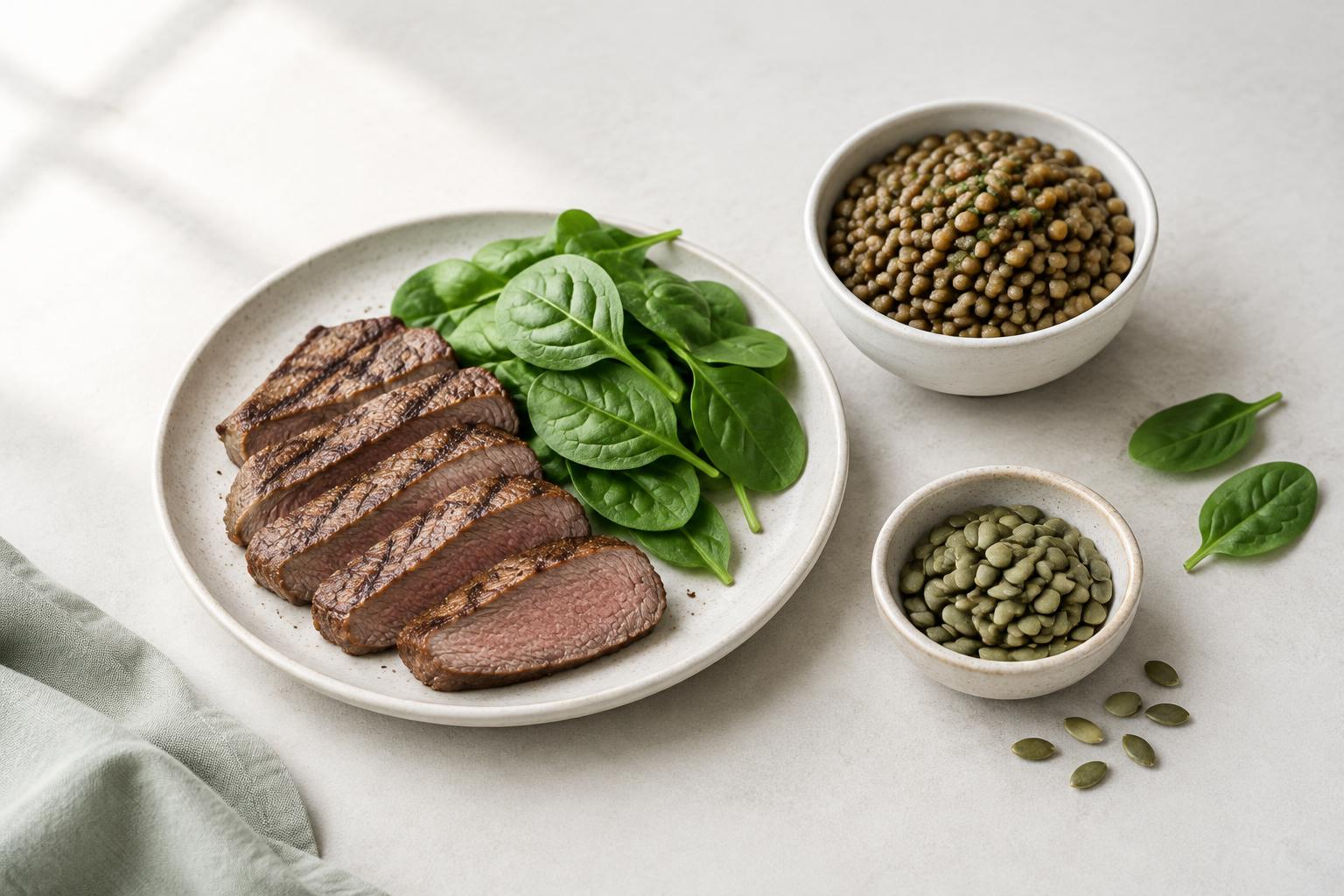
Iron comes in two forms. Haem iron from animal foods (red meat, liver, poultry) is absorbed more easily. Non-haem iron from plants (lentils, tofu, nuts, seeds, fortified cereals) is harder to absorb, but vitamin C helps.
Try these pairings:
-
Beef and red capsicum stir fry: the vitamin C lifts absorption across the whole dish.
-
Lentil and roasted capsicum salad with lemon dressing: a plant-based option. Lemon is known to improve the absorption of non-haem iron from lentils.
-
Broccoli, lemon and lentil salad: more vitamin C from the lemon and broccolli, more iron uptake.
The takeaway
Don't guess. Ask your GP for a ferritin test, especially if you have heavy periods, eat plant-based, or are planning a pregnancy.