
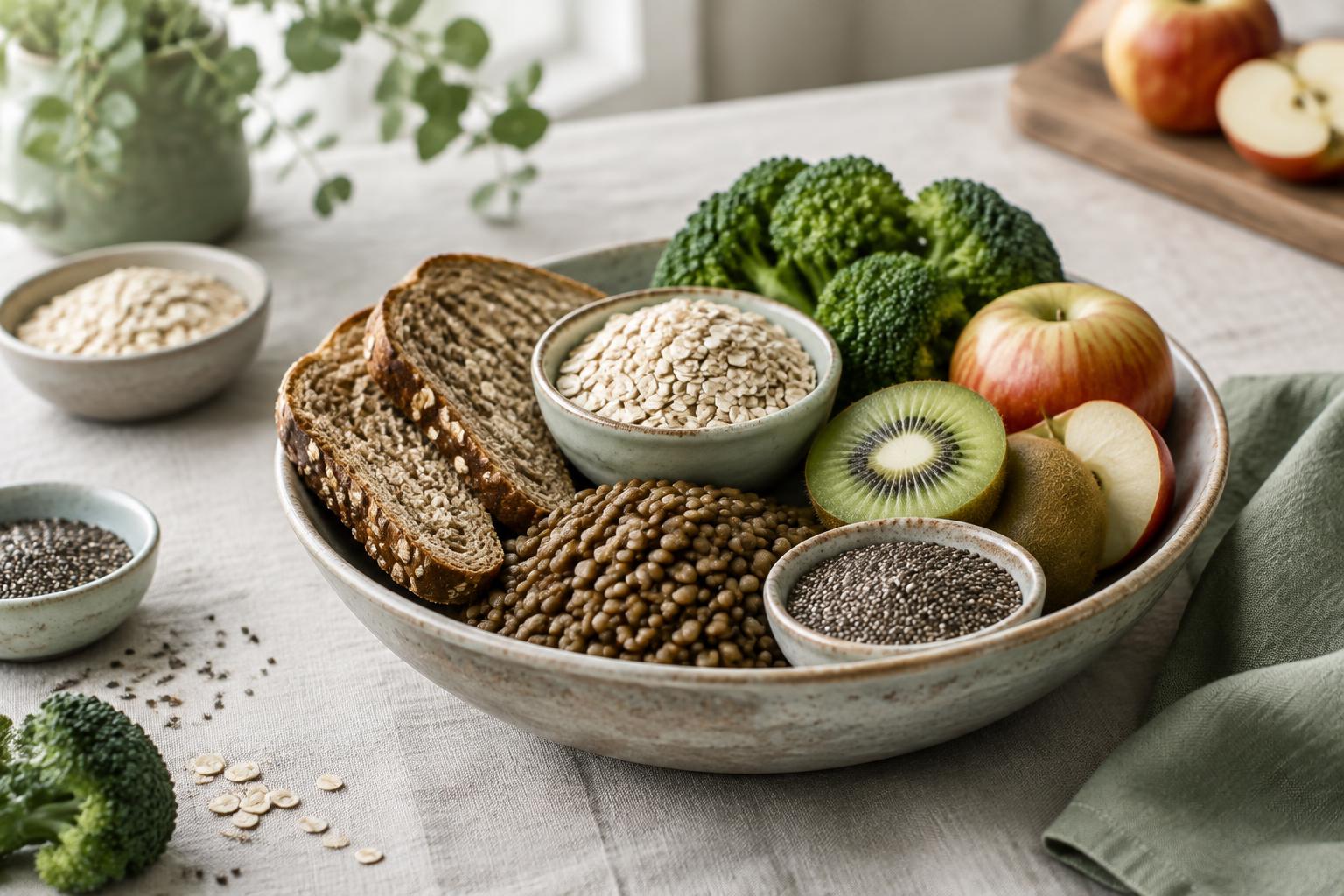
Everyone's talking about protein. Fibre is the undiscovered hero nobody's inviting to the party, and she's about to enter the chat...
Protein is having a moment. Everyone knows you need it now. It's the cool nutrient, the strong, toned, Pilates-vibe one that helps build muscle. And fibre? People are only just starting to talk about it, and it's still not sexy. But, the truth is fibre's entering its prime, and you need to know about it.
I think part of the problem is what we think of when we hear the word, FIBRE. It makes us think of constipation, bloating, pooing and farting, all the things everyone wants to avoid. But here's the thing: the answer to avoiding those things is fibre, not protein. And it deserves a much better reputation.
What fibre actually does for you
When you build fibre up gradually, it helps with a lot:
- Keeps you regular. Things move through smoothly, and for many people that means going about once a day.
- Helps manage bloating, as long as you choose and build up your fibre the right way.
- Feeds your gut microbiome, which supports Gut Health; where it gets really interesting.
Not all fibre is the same
Different types of fibre do different jobs:
- Gel-forming fibre forms a gel that draws water into the gut and softens your stool.
- Bulking fibre adds bulk and helps things move along.
- Fermentable fibre is fermented by the bacteria in your gut. This is great for your microbiome, but it also produces gas, which can mean bloating and flatulence.
Fibres that are less fermentable produce less gas, so they're better if bloating is your concern. Psyllium husk is a really good example. It's low in fermentability, so you can get fibre in without the bloating and the stinky farts. Take it with plenty of water.
We don't eat fibre for ourselves
This is my favourite part. We eat fibre to feed the trillions of microbes in our gut. They feed on it and produce short-chain fatty acids, which have health benefits for us. It's a beautiful, collaborative relationship: we look after them, and they look after us.
If you want to know why that gut-brain-body relationship matters so much, have a read of my post, Why Gut Health Matters More Than You Think.
So fibre really is a sexy nutrient. It builds a wholesome relationship between you and your microbiome, and it can leave you feeling less bloated, less gassy. More sexy.
The catch: go low and slow
The downfall of fibre is that if you increase it too fast, you'll get gas, and it can be a bit smelly. Some of that comes from the fermentation of fibre itself, and some from sulfur-containing foods like broccoli, cabbage, onions and garlic. Increase gradually, drink enough water, and your gut will adjust.
How much do you need?
Under the Australian and NZ Nutrient Reference Values, the Adequate Intake is 25 grams a day for women and 30 grams a day for men. In my practice, I always say, why not just aim for 30 grams? It's going to do a lot of good either way.
Simple swaps to get more fibre
- Brown or wholemeal bread instead of white
- Wholemeal pasta instead of plain pasta
- More whole foods: whole grains, nuts, seeds, fruit, veggies and legumes
Pretty much all plants have fibre, so this is your little reminder to eat more plants, and a wider variety of them, so you get a good variety of fibre.
The takeaway
Go low and slow, drink plenty of water, and eat more plants. Live a sexy life that's low on bloating.